[Pool Landscaping Ideas for Melbourne Backyards: 2026 Trends]
A swimming pool transforms a backyard, but the landscaping around it creates the lifestyle. We often see homeowners focus entirely on the pool shell, only to realise the surrounding space is what makes it a destination. The right landscape design connects the water to your home and turns a simple swim into an experience.
Here are the pool landscaping trends dominating Melbourne in 2026, along with practical ideas to inspire your project.
Trend 1: Native and Indigenous Plantings
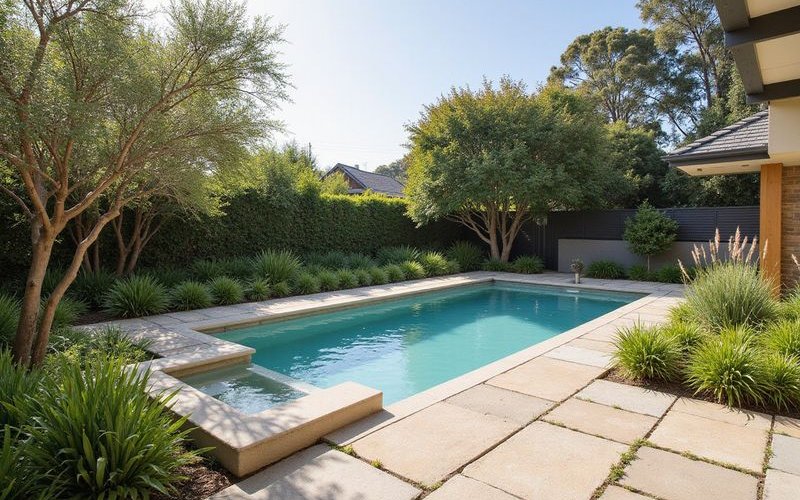
Melbourne homeowners are moving away from thirsty exotics and embracing Australian natives for pool surrounds. We find that native plantings solve specific local challenges like the heavy clay soils found in suburbs like Doncaster and Templestowe. They offer drought tolerance and attract local birdlife while creating a soft, textured aesthetic that softens the hard lines of modern architecture.
Popular Native Choices for Poolsides
Selecting the right cultivar is critical to avoid root damage to your pool shell.
Westringia ‘Mundi’ or ‘Grey Box’ These “coastal rosemary” varieties are superior to the standard form because they stay compact and require far less pruning. Our team uses them for low hedging that defines the pool zone without blocking sightlines.
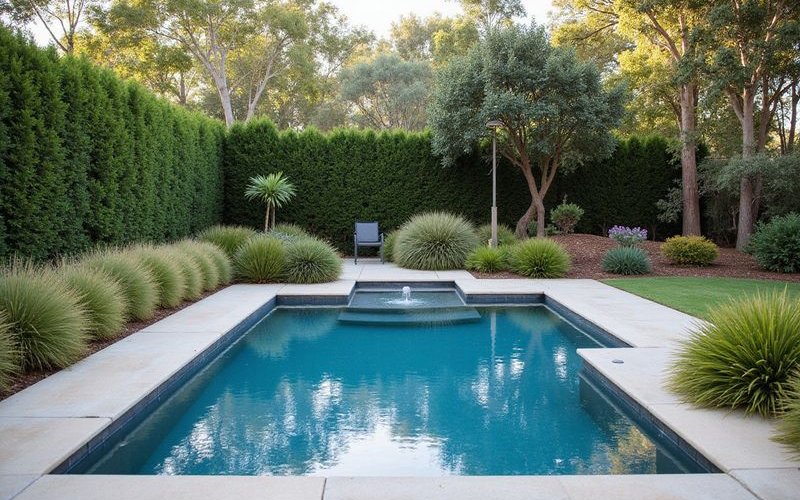
Lomandra ‘Tanika’ This is the workhorse of Melbourne pool landscaping. Its soft, non-invasive roots won’t crack your pool coping, and it thrives in the reflected heat of poolside paving.
Grevillea ‘Moonlight’ For screening, this upright variety provides year-round privacy and cream-coloured flowers. You need to position them slightly back from the water to manage flower drop, but the privacy trade-off is worth it.
Correa ‘Dusky Bells’ These work perfectly in shaded pockets under fence lines. Their dense growth suppresses weeds, and the bell-shaped flowers add a subtle pop of colour in winter when the pool isn’t in use.
Designing with Natives
Success with natives comes from layering textures rather than forcing symmetry. We recommend grouping plants in odd numbers (threes or fives) to mimic the natural Australian bush. This approach reduces maintenance time significantly compared to formal English-style gardens.
Trend 2: Resort-Style Luxury
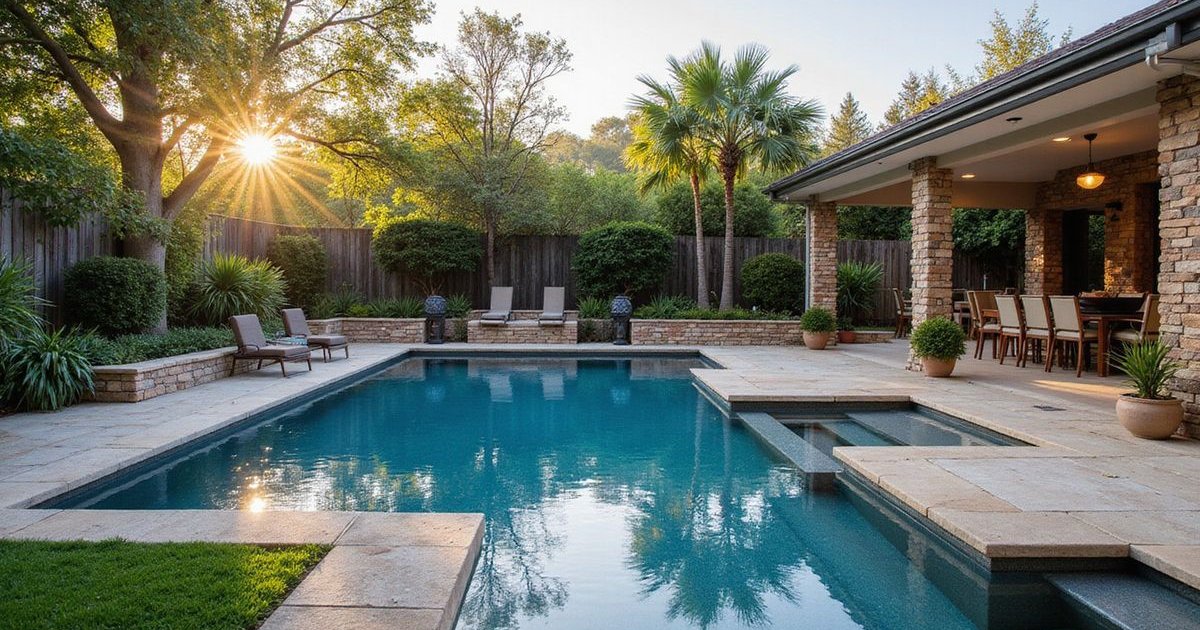
The demand for a “holiday at home” has evolved into high-end, resort-style environments. Homeowners in Melbourne’s inner east are allocating larger portions of their budget to finishings that mimic 5-star hotels.
Creating the Resort Feel
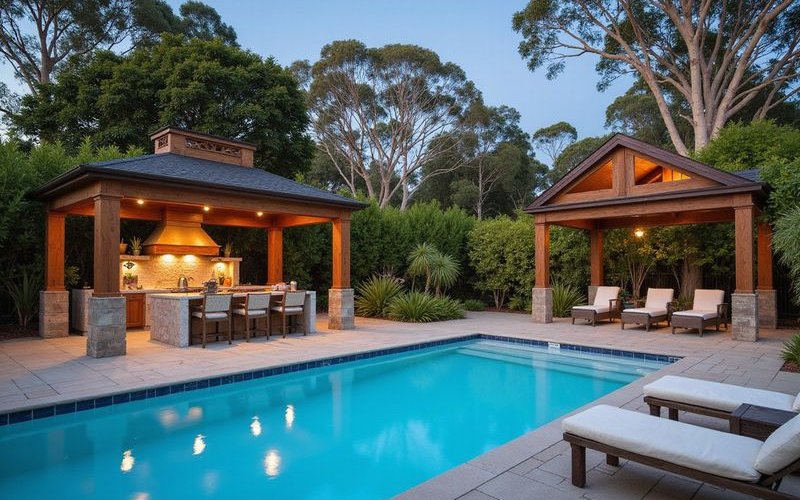
Zoned Living Areas A simple pool isn’t enough; you need distinct zones. We often design a raised lounging deck separate from the dining area to create a “journey” through the space.
Premium Material Selection Travertine and limestone remain top choices for coping due to their cool-underfoot properties. In 2026, we are seeing a shift toward large-format sizes (800mm x 400mm) which minimise grout lines and enhance the feeling of space.
Architectural Shade Cantilevered umbrellas are being replaced by permanent structures. Fixed pavilions with insulated roofing allow for integrated heating and lighting, extending the usability of the pool area well into autumn.
Tropical Plantings for Melbourne
You can achieve a tropical look without using delicate plants that will fail in a Melbourne frost.
| Plant Name | Role in Landscape | Melbourne Hardiness |
|---|---|---|
| Strelitzia nicolai (Giant Bird of Paradise) | Vertical screening and drama | High (protect from strong winds) |
| Trachycarpus fortunei (Windmill Palm) | The classic resort palm tree | Excellent (very cold tolerant) |
| Ligularia reniformis (Tractor Seat) | Lush ground cover with glossy leaves | Good (needs shade/water) |
| Cycad revoluta | Architectural focal point | High (slow growing) |
Trend 3: Mineral and Magnesium Pools
The traditional chlorine pool is rapidly losing ground to mineral systems. Systems like MagnaPool use magnesium and potassium minerals to sanitise the water.
Why the Shift?
Health Benefits Swimmers with sensitive skin (like eczema) report significantly less irritation in mineral water. The water feels silkier and lacks the strong chemical odour associated with standard chlorine.
Maintenance Differences A mineral pool still requires balancing, but the “buffer” provided by the minerals often leads to more stable water chemistry. We advise clients that while the initial setup cost is higher (typically $800-$1,500 more for the equipment), the ongoing chemical costs are comparable.
Natural Pools True biological natural pools (using plants for filtration) remain a niche choice due to the space required. A regeneration zone must be roughly equal in size to the swim zone, which is often impractical for standard blocks in suburbs like Kew or Hawthorn.
Trend 4: Integrated Outdoor Living
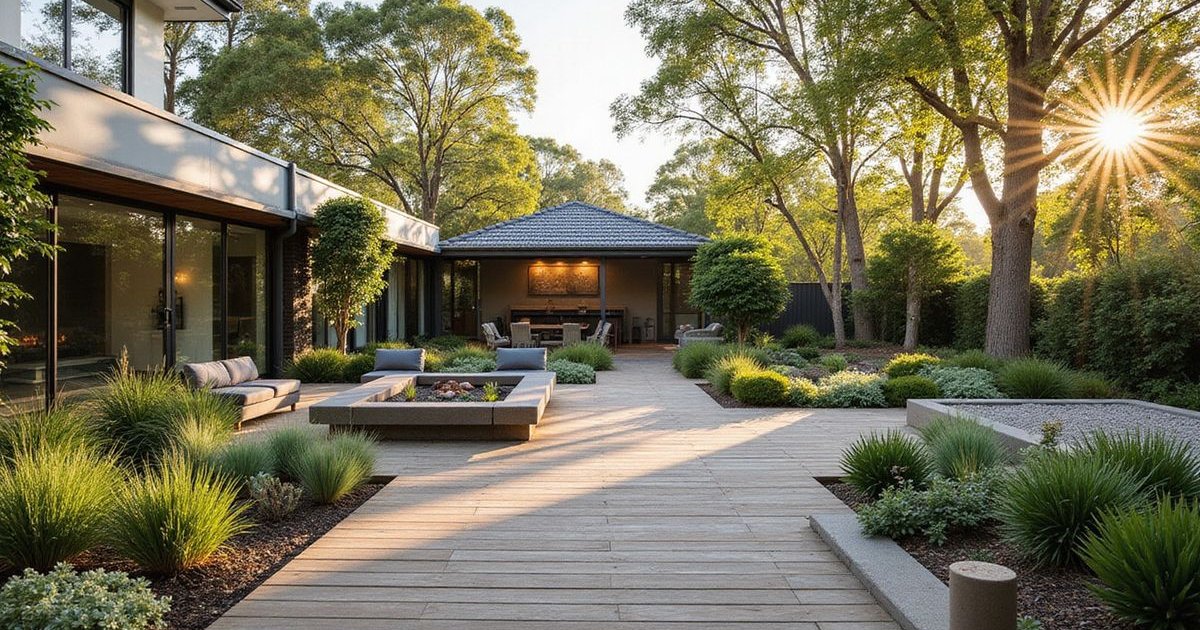
The pool is now treated as one component of a larger entertainment hub. We rarely design a pool in isolation anymore.
Essential Integration Elements
Outdoor Kitchens The BBQ is moving closer to the pool. Current designs feature built-in cabinetry using weather-resistant materials like Dekton or porcelain, which can withstand Melbourne’s variable weather better than natural stone benchtops.
Fire Pits Sunken fire pits adjacent to the pool create a dramatic visual contrast between fire and water. This feature draws people outside even in winter, increasing the return on your landscaping investment.
Level Changes Many properties in the north-east suburbs sit on sloping land. Instead of flattening the site, we use the slope to create tiered living spaces. A pool set 600mm lower than the house creates a natural seating edge and keeps pool furniture from obstructing views.
Trend 5: Sustainable Design
Environmental regulations and rising energy costs are reshaping how pools are built and run.
Energy Efficiency Upgrades
Variable Speed Pumps These are now the standard. A variable speed pump can reduce energy consumption by up to 80% compared to a single-speed pump. The payback period on the extra upfront cost is usually less than two years.
Pool Covers In Victoria, a pool cover is practically mandatory for heat retention. Hidden pool cover rollers (housed in a pit under the deck or paving) are a top request in 2026 to keep the aesthetic clean.
Permeable Paving Councils are stricter on stormwater runoff than ever before. We use permeable paving solutions on driveways and paths leading to the pool area. This allows water to infiltrate the soil rather than overwhelming the stormwater system.
Trend 6: Dark and Moody Palettes
The era of the bright blue pool is sharing the stage with deeper, more sophisticated tones.
The Dark Aesthetic
Interior Finishes Dark grey, charcoal, and deep green interior tiles or pebbles are trending. These darker colours create a mirror-like effect on the water’s surface, reflecting the surrounding landscaping and sky.
Thermal Benefits Darker pools absorb more heat from the sun. In Melbourne’s climate, this can passively raise the water temperature by a few degrees, potentially extending your swimming season by weeks without extra heating costs.
Material Pairings We pair these dark pools with lighter coping (like silver travertine) to create a crisp visual frame. This contrast highlights the water colour and ensures the edge is visible for safety.
Trend 7: Glass Pool Fencing Alternatives
Glass fencing is standard, but it has downsides—namely, the cleaning required to keep it pristine.
Emerging Barrier Trends
Vertical Batten Fencing Aluminium or timber vertical battens are gaining popularity. They offer privacy that glass cannot and meet the non-climbable regulations if spaced correctly (gaps no wider than 100mm).
The “Floating” Fence For sloping blocks, we often install glass fencing into a recessed channel in the concrete. This eliminates the visible spigots (metal posts), creating a “floating” appearance that looks incredibly sleek.
Cost Comparison Making an informed choice requires looking at the numbers.
| Fencing Type | Estimated Cost (Installed) | Pros | Cons |
|---|---|---|---|
| Frameless Glass | $600 - $1,000 per metre | Unobstructed views, modern look | High cleaning, higher cost, zero privacy |
| Aluminium Flat Top | $250 - $400 per metre | Affordable, low maintenance | Can look “cheap,” obstructs view |
| Vertical Battening | $450 - $800 per metre | Privacy, architectural style | Requires careful design for compliance |
The key is treating the barrier as a design opportunity rather than an afterthought.
Trend 8: Compact Pool Designs
Block sizes are shrinking, and backyard space is at a premium.
Maximising Small Spaces
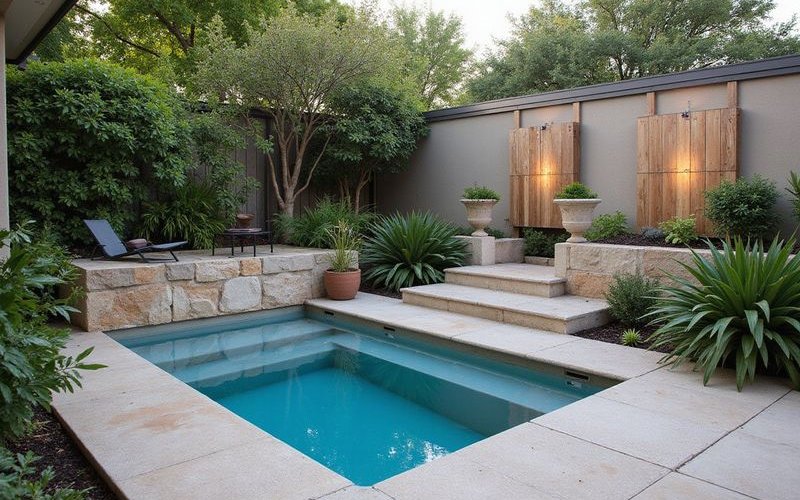
The Plunge Pool A 4m x 2.5m plunge pool is often sufficient for cooling off and relaxing. We position these pools against a boundary (where regulations permit) to leave the rest of the garden open for lawn or entertaining.
Heating Efficiency Smaller volumes of water are much cheaper to heat. You can afford to keep a plunge pool at spa-like temperatures year-round, which isn’t financially viable for a large 10m pool.
Multi-Function Designs We are seeing designs that include powerful swim jets. This transforms a compact plunge pool into a functional lap pool for exercise, without needing the 15m length.
Planning Your Pool Landscape
If you are planning a new pool or renovating an existing one, the process is as important as the design.
Engage Design Early
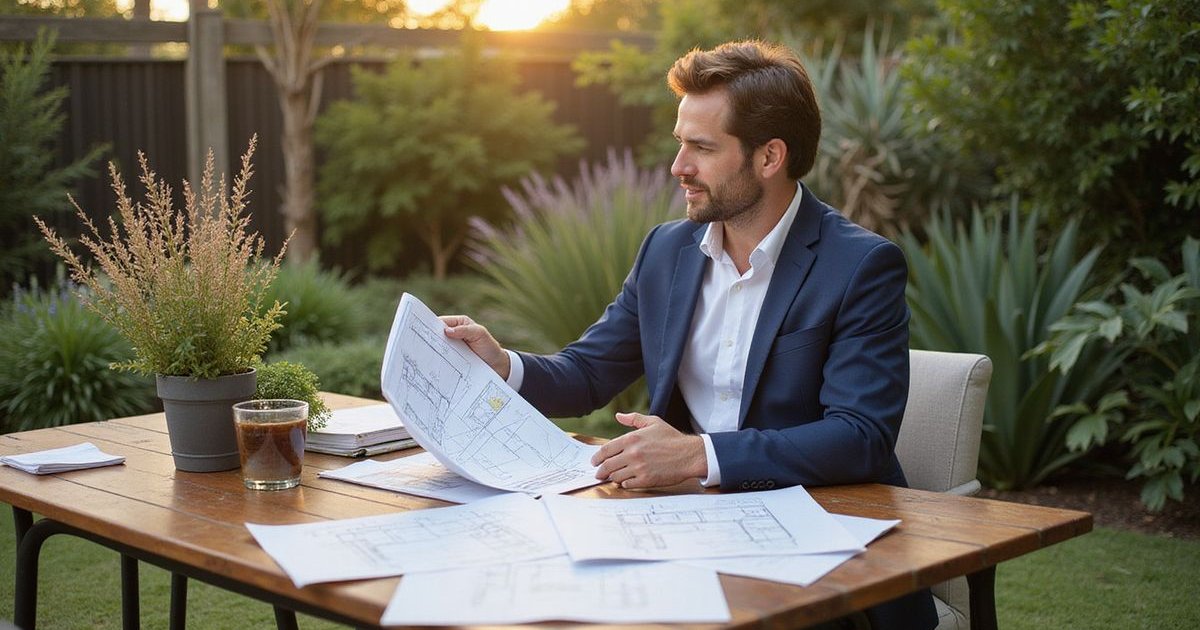
The best results come when the pool and landscape are designed together. We frequently see pools placed in the “easiest” spot for the builder, which ruins the flow of the rest of the yard. Engaging a landscape designer before the pool shell is dug ensures the levels work for the decking, drainage, and planting.
Permit Timelines
You must account for council timelines. In areas like Boroondara or Banyule, obtaining planning permits (especially if you have overlays) can take 3 to 6 months. Building permits for the pool safety barrier are separate and also required.
Budget Realistically
A complete pool landscape project involves more than just paving.
Typical Cost Breakdown (Estimates)
- Hard Landscaping (Paving/Decking): $300 - $600 per square metre.
- Fencing: $300 - $1,000 per linear metre.
- Planting & Soil Prep: $5,000 - $15,000+ depending on maturity.
- Lighting & Irrigation: $3,000 - $8,000.
Most homeowners spend between 40% and 80% of the pool shell cost on the surrounding landscaping.
Transform Your Pool Area
A pool is a major investment, and the landscape around it dictates how much you will actually enjoy it. Whether you are dealing with a steep slope in Eltham or a compact courtyard in Richmond, the right design solves the problems and elevates the aesthetic.
Contact us at David Claude Landscape Design to discuss your vision. We can help you navigate the complexities of permits, plants, and paving to create a Melbourne backyard you will love year-round.