The rolling hills of Melbourne’s north-eastern and inner-eastern suburbs offer stunning views, but they also present a unique set of challenges for homeowners. Sloping blocks, heavy clay soil, and strict council overlays can make transforming your backyard feel like an uphill battle.
We specialize in turning these difficult terrains into functional, high-value assets. Most homeowners in areas like Boroondara, Banyule, and Manningham know their land has potential, but they struggle to visualize how to conquer the grade changes without blowing their budget on retaining walls.
This guide breaks down exactly how we approach landscape design in Melbourne, giving you the insider knowledge to make smart decisions for your property.
What Is Landscape Design?
Landscape design acts as the master plan for your outdoor environment. It bridges the gap between your wish list and the physical reality of your site, combining horticulture, engineering, and spatial planning.
Professional design delivers more than just a planting plan. It resolves complex site issues such as:
- Drainage and Water Management: diverting runoff away from your home’s foundations.
- Structural Engineering: calculating load requirements for retaining walls over one meter.
- Microclimate Creation: positioning trees to block the hot northerly winds while capturing winter sun.
- Compliance: ensuring all structures meet local council height and setback regulations.
Why Invest in Professional Design?
You might look at a sloping backyard and wonder if you can just hire a contractor to “level it out.” In our experience, skipping the design phase on complex Melbourne sites often leads to costly rework later.
Maximize Your Property Value
Real estate data from 2025 suggests that high-quality landscaping can increase a property’s value by 6% to 15%. For a home in the inner-east, that percentage translates to a significant financial return. A well-executed deck alone can offer an ROI of over 80%, provided it connects seamlessly with your indoor living areas.
Avoid The “Drainage Disaster”
We often see DIY projects where a new patio inadvertently floods the back door during a heavy downpour. Professional designers calculate fall ratios and specify drainage systems to handle Melbourne’s storm surges before construction ever begins.
Secure a Long-Term Vision
Plants that look cute in the nursery can turn into monster maintenance headaches in five years. We select species based on their mature size and root systems, ensuring they won’t crack your new retaining walls or block your guttering a decade from now.
Achieve Cohesive Flow
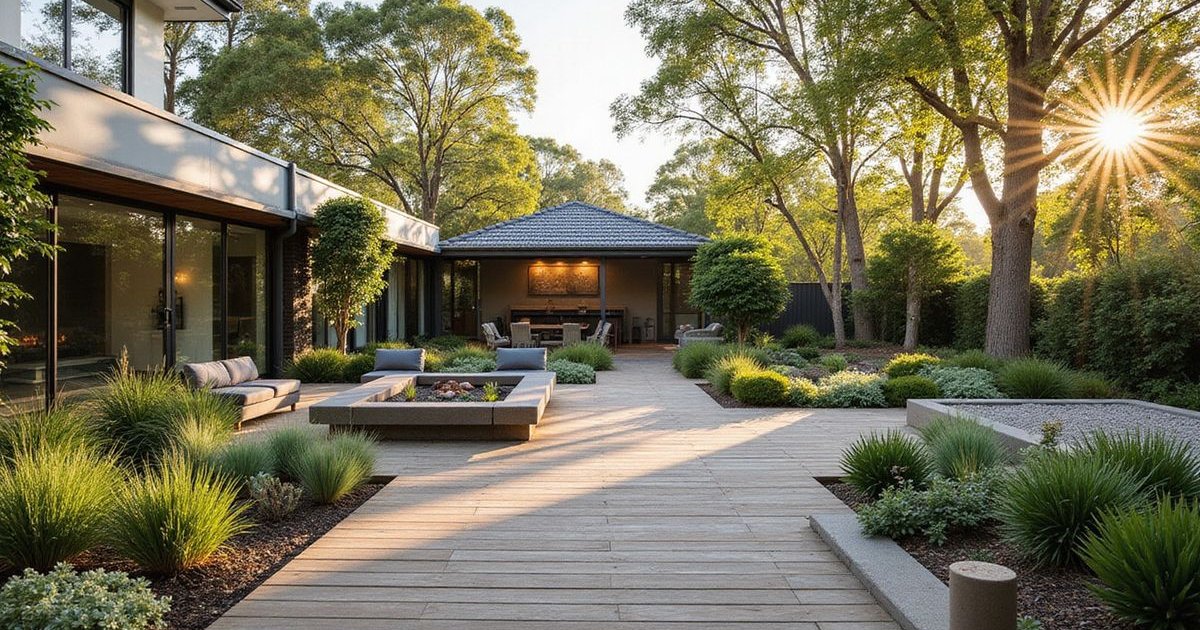
A disjointed garden feels smaller than it actually is. Design unifies your hardscapes (paving, decking) with your softscapes (plants, lawn), creating a sense of spaciousness even on steep, narrow blocks.
The Landscape Design Process
Knowing the roadmap helps you plan your life around the project. Here is the typical workflow we use to take a project from an idea to a finished garden.
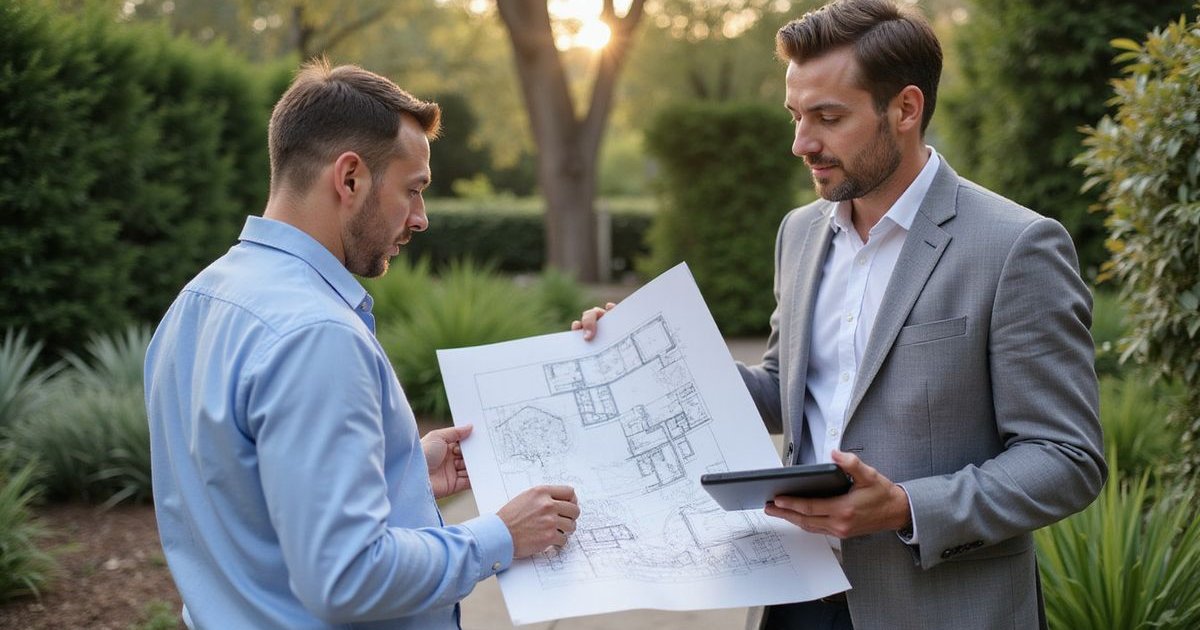
Step 1: Initial Consultation
We start by walking the site with you to understand your goals. This meeting usually lasts 60 to 90 minutes and covers:
- Your Lifestyle: Do you need a safe play area for kids or a sophisticated entertaining deck?
- The Budget: We discuss realistic costs (typically 5-10% of property value for a full landscape).
- The Timeline: Design phases often take 3-4 weeks before construction pricing can begin.
- Site Challenges: Identifying obvious issues like steep grades or poor access.
Step 2: Site Analysis
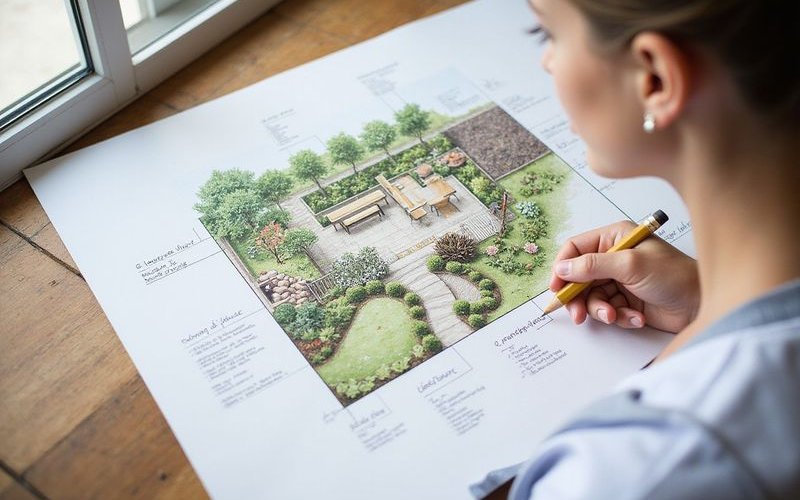
We dig deeper into the physical constraints of your land. This technical step includes:
- Levels Survey: measuring the exact fall of the land to plan retaining walls.
- Soil Testing: checking pH and composition (often heavy clay in the north-east).
- Solar Mapping: tracking sun paths to position shade trees effectively.
- Utility Locating: marking underground gas, water, and power lines.
Step 3: Concept Development
This is where the creative vision takes shape. We present 2-3 broad options that show different ways to organize the space.
You will see:
- Zoning diagrams (e.g., “Entertaining Zone,” “Utility Zone”).
- Proposed level changes and terrace locations.
- Material palettes (timber vs. stone vs. concrete).
- General planting themes (native, formal, contemporary).
Step 4: Design Development
We refine your favorite concept into a precise plan. The focus shifts to specifics, such as choosing Eucalyptus species for screening or selecting the exact cut of bluestone pavers.
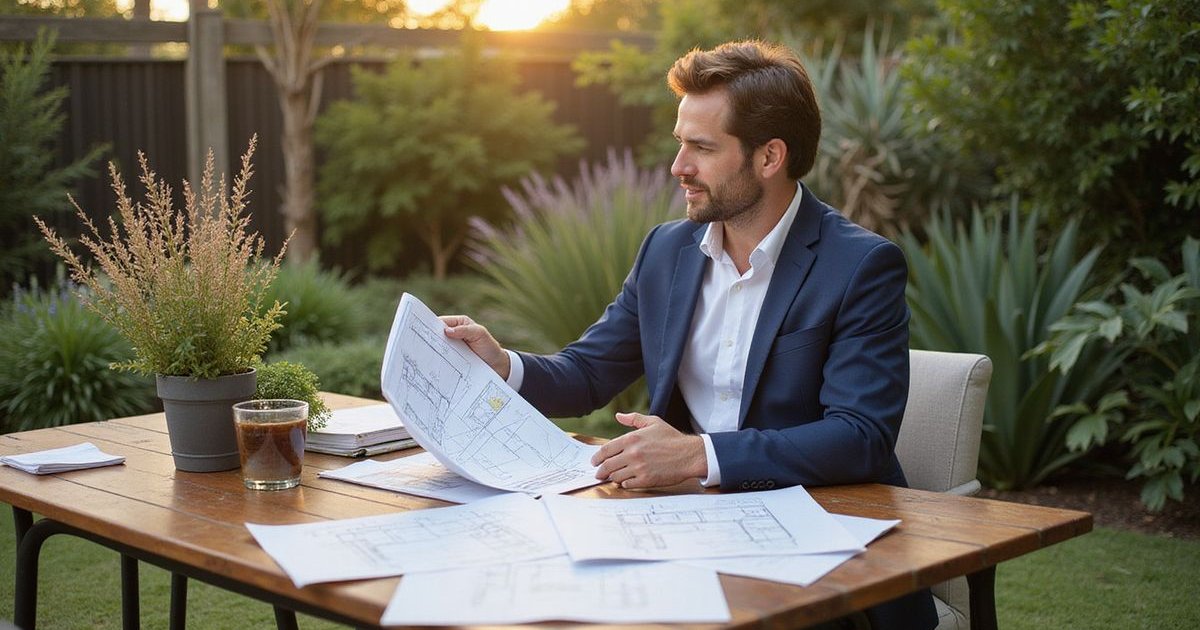
Step 5: Documentation
This technical package instructs the builders. It includes:
- Dimensioned Layout Plans: essential for accurate setting out.
- Planting Schedules: quantities, pot sizes, and botanical names.
- Lighting Plans: circuit layouts for garden ambiance.
- Engineering Details: specifications for walls over 1000mm in height.
Step 6: Implementation Support
We stay involved during the build to ensure the contractor follows the plan. Unexpected surprises, like hitting rock during excavation, require quick design adjustments that keep the project moving.
Landscape Architect vs Landscape Designer
The terminology can be confusing. Here is the practical difference for Melbourne homeowners.
Landscape Architects
These professionals hold a university degree and are often registered with the Australian Institute of Landscape Architects (AILA). They are trained to handle large-scale planning and complex grading issues.
Best suited for:
- Steep sites requiring major earthworks.
- Properties in Significant Landscape Overlays (SLO).
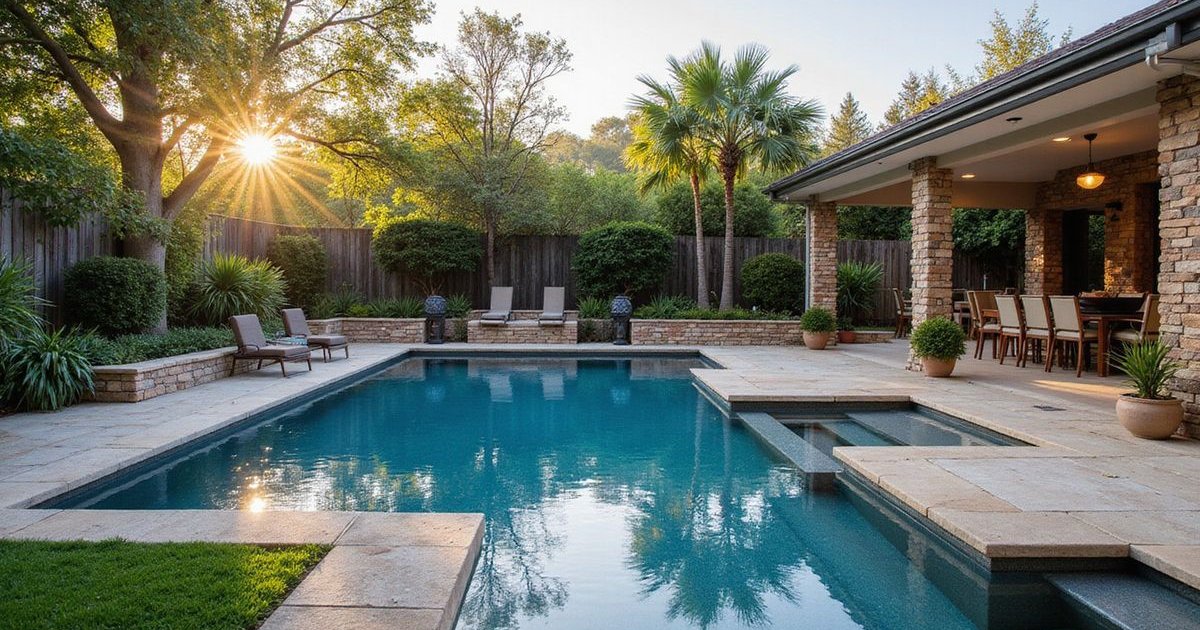
- Projects involving pool integration and structural permits.
Landscape Designers
Designers often come from a horticulture or construction background. Their strength lies in plant knowledge and practical garden layouts.
Best suited for:
- Planting-focused renovations.
- Flat or gently sloping blocks.
- Garden rejuvenations without major structural changes.
There is often significant crossover. Many top-tier designers partner with structural engineers to handle the complex permitting required for retaining walls, giving you the best of both worlds.

Finding the Right Designer
Where to Look
Local Referrals: Ask neighbors with similar terrain. A designer who has successfully managed a steep driveway in Ivanhoe will understand the specific engineering constraints of that area.
LIAV Directory: The Landscape Industries Association Victoria lists vetted professionals.
Previous Projects: Look for portfolios that feature “before and after” shots of difficult sites, not just pretty close-ups of flowers.
What to Ask
Sharpen your interview process with these targeted questions:
- “How do you handle council permits for retaining walls over one meter?” (They should mention structural engineers).
- “What is your experience with heavy clay soil?” (Look for answers involving gypsum and organic matter).
- “Do you offer construction administration?” (Crucial for complex builds).
- “Can you provide a cost estimate for the build based on this design?”
Red Flags
Watch out for these warning signs:
- No written agreement: Professional services always require a contract.
- Ignoring drainage: If they don’t mention water management on a sloping block, walk away.
- “One size fits all” planting: Suggesting plants that hate clay soil (like many proteas) for a Heidelberg garden.
Melbourne-Specific Considerations
Planning Overlays (SLO and VPO)
Many eastern suburbs fall under Significant Landscape Overlays (SLO) or Vegetation Protection Overlays (VPO).
We frequently deal with these regulations in councils like Manningham and Boroondara. They often require a permit to remove native trees or even to conduct earthworks near tree protection zones. Ignoring this can lead to substantial fines and an order to reinstate the land.
The Clay Soil Challenge
The heavy clay found in suburbs like Doncaster and Templestowe retains water in winter and cracks in summer.
Our Clay-Busting Strategy:
- Import Quality Topsoil: raise garden beds 200-300mm above the natural clay level.
- Add Gypsum: breaks down the clay structure over time.
- Choose Tough Natives: Plants like Lomandra longifolia (Mat Rush) and Acacia cognata (‘Limelight’) thrive in these conditions.
Terrain and Retaining Walls
If your block slopes, you are likely dealing with the “1-meter rule.”
In Victoria, any retaining wall higher than one meter requires a building permit and engineering certification. We often design terraced walls (two 600mm walls with a garden bed in between) to avoid this trigger and create a softer, more lush appearance.
Climate Resilience
Melbourne’s “four seasons in one day” is real. We specify materials that can handle the thermal expansion of a 40°C summer day and the damp chill of a July morning.
Making the Most of Your Design Investment
Know Your Numbers
Landscaping costs in 2025 have stabilized but remain a significant investment.
General Cost Guide:
| Item | Estimated Cost (2025) |
|---|---|
| Design Fees | $2,500 - $7,000+ |
| Paving | $100 - $200 per m² |
| Decking | $300 - $500 per m² |
| Retaining Walls | $250 - $650 per m² |
Prepare Before Your Consultation
You save time and money by gathering:
- A copy of your land title (showing easements).
- Any existing site surveys.
- A Pinterest board of styles you love (and hate).
Trust the Process
Good design prevents expensive construction errors. It is cheaper to move a wall on paper than it is to move it on site.
Ready to Start?
Your challenging block is an opportunity to create something extraordinary. We have the expertise to manage the slopes, the soil, and the council regulations, delivering a garden that adds real value to your home.
Contact us to discuss your project and discover how award-winning design can transform your outdoor space.